
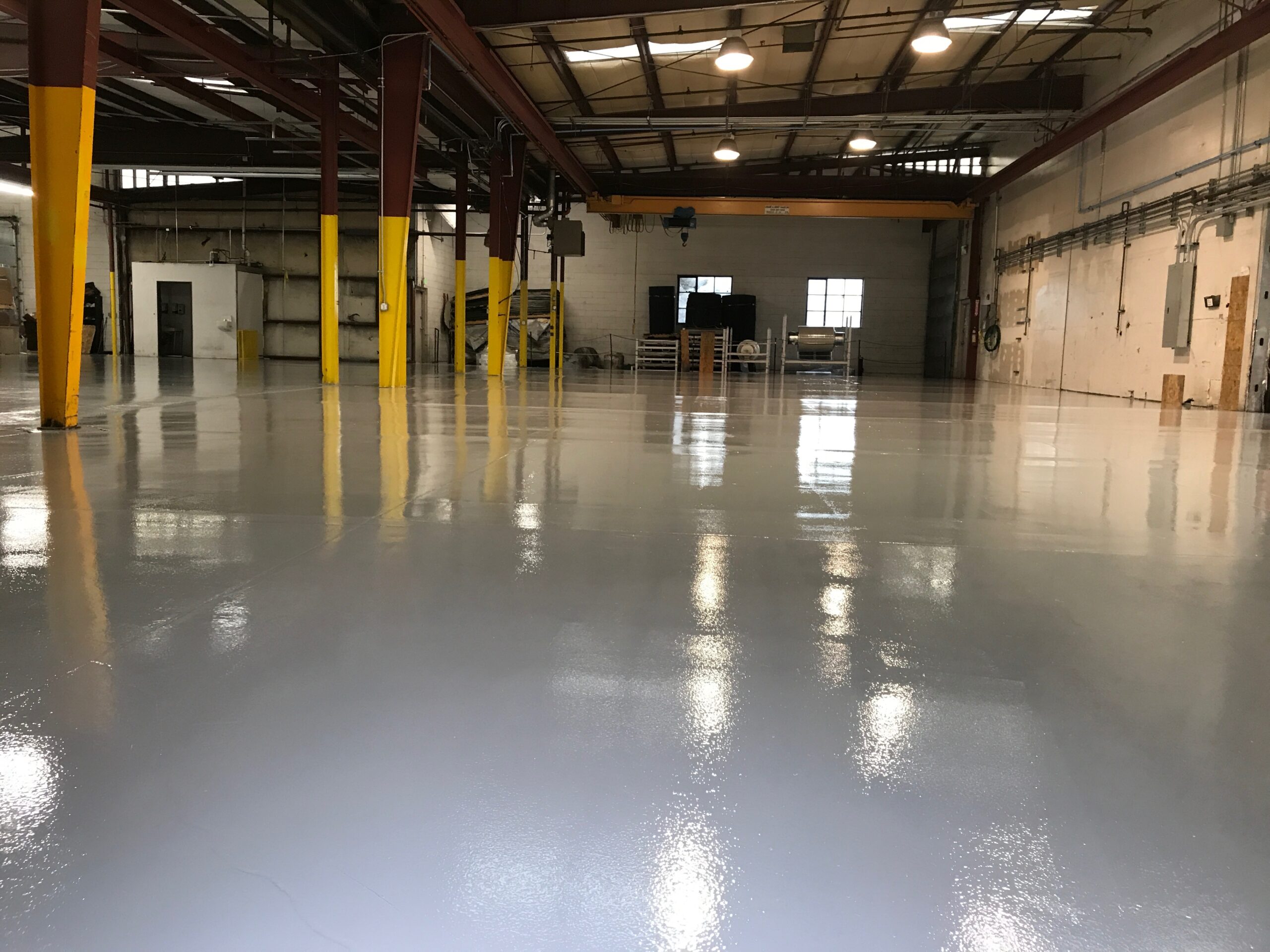
Manufacturing & Industrial Flooring Denver
Epoxy, Urethane Cement & Polished Concrete Systems for Production Floors, Assembly Areas & Heavy Industrial Environments
Colorado Concrete Repair engineers and installs flooring systems for manufacturing and heavy industrial environments across the Denver Front Range — from production floors and assembly lines to chemical processing areas and high-traffic warehouse corridors. Our systems are specified for impact resistance, chemical exposure, and continuous forklift and equipment traffic. 20+ years of industrial flooring experience. 1,000+ completed projects. Proud member of Associated General Contractors (AGC).
OR, SHARE YOUR PROJECT DETAILS:
Built for Production
Chemical resistant, impact resistant, and high-traffic rated flooring systems engineered for manufacturing environments that run hard every shift.
1,000+ Projects
Completed across Denver manufacturing plants, assembly facilities, machine shops, chemical processing areas, and heavy industrial operations.
80–90%
Of system performance is surface preparation — surface preparation is the majority of the work on most projects.
FREQUENTLY ASKED QUESTIONS
Manufacturing Flooring — Common Questions
What flooring system holds up best under heavy machinery and forklift traffic?
High-build epoxy and urethane cement are the standard specifications for manufacturing floors under heavy rolling loads and continuous forklift traffic. Epoxy provides excellent impact and abrasion resistance for dry production environments. Urethane cement is the better specification where chemical exposure, thermal cycling, or moisture vapor are factors in addition to mechanical stress. System selection depends on your actual operating conditions — traffic patterns, chemical exposure, and slab condition all factor in.
How do you protect manufacturing floors from chemical spills and hydraulic fluid?
Chemical resistance is a function of system selection and surface preparation. High-build epoxy resists most common manufacturing chemicals — hydraulic fluid, coolants, solvents, and mild acids. For aggressive chemical environments or areas with regular wash-down, urethane cement provides superior chemical and thermal resistance. We specify based on your actual chemical exposure profile, not a generic product sheet. Containment details like cove base and trench drain integration are addressed during preconstruction scoping where required.
Can you install safety line striping and demarcation as part of the flooring project?
Yes. Safety line striping, pedestrian walkways, forklift lanes, and hazard demarcation are integrated into the flooring scope where needed. We install striping after the base system cures, using high-visibility epoxy paint rated for industrial traffic. If your facility has OSHA marking requirements or internal safety standards, we incorporate those specifications during project planning so striping is coordinated with the floor system — not added as an afterthought.
Our concrete floors generate dust that contaminates products. What are our options?
Concrete dust is caused by surface deterioration — the slab breaks down under traffic and releases fine particles. Polished concrete with a lithium densifier permanently hardens and seals the surface, eliminating dust generation without adding a coating layer. For production areas that also need chemical resistance, a high-build epoxy or grind-and-seal system provides both dust control and a protective surface. The right approach depends on whether the area needs chemical protection in addition to dust control.
Our production floor has impact damage and spalling from dropped tools and heavy parts. Can it be repaired?
Most impact-damaged concrete can be repaired and recoated rather than replaced. We route and fill cracks, patch spalled areas with compatible repair mortars, and level the substrate before applying the new flooring system. If the damage is structural — deep cracking, settlement, or joint failure — we address that during the repair phase. The key is diagnosing the damage before specifying the system, not after. Coating over a compromised slab produces failures within months.
Manufacturing Flooring Systems Compared
Select a system to see installation details, performance strengths, and tradeoffs.
High-Build EpoxyProduction & assembly▼
Best for: Production floors, assembly areas, machine shops, and high-traffic manufacturing zones with chemical exposure and heavy rolling loads.
✓ Strengths:
- Excellent impact, abrasion, and chemical resistance
- Handles heavy forklift and equipment traffic
- Seamless non-porous surface; wide finish and color options
- Integrates with safety line striping and demarcation
Tradeoffs:
- Not suitable for wet production or heavy wash-down environments
- Prone to delamination under high moisture vapor transmission
- Longer cure time than urethane cement — requires scheduling around production
Urethane CementChemical & thermal exposure▼
Best for: Manufacturing areas with aggressive chemical exposure, thermal cycling, wash-down requirements, or high moisture vapor conditions.
✓ Strengths:
- Resists thermal shock, aggressive chemicals, and moisture vapor
- Returns to service in hours — minimal production disruption
- Bonds to damp substrates where epoxy cannot
- Self-sloping capable for drainage zones and containment areas
Tradeoffs:
- Highest material cost of manufacturing flooring systems
- Requires PPE due to off-gassing during install
- Short working window demands experienced crews
Polished ConcreteWarehousing & corridors▼
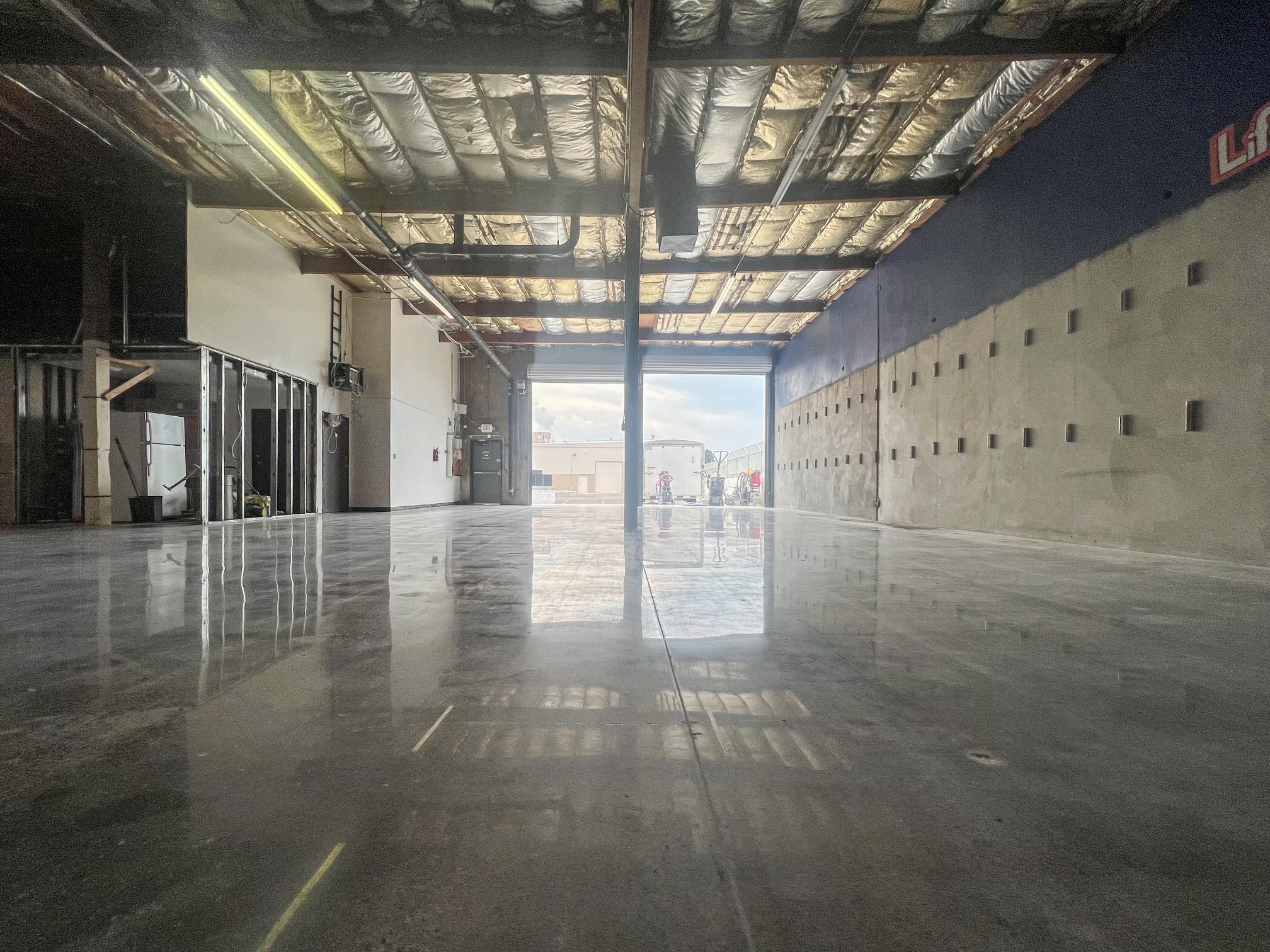
Best for: Warehouse aisles, receiving corridors, staging areas, and dry manufacturing zones where dust control and low maintenance are priorities.
✓ Strengths:
- No coating layer to peel, bubble, or reapply
- Lowest long-term maintenance cost
- Dust-free finish with densifier treatment — eliminates concrete dusting
Tradeoffs:
- Not appropriate for wet, chemical-exposed, or heavy-impact production areas
- Requires clean, sound substrate
- Limited chemical resistance vs. coated systems
Concrete Repair & ResurfacingScope-based · Substrate repair▼
Best for: Cracked, spalled, or deteriorated slabs needing structural repair before a flooring system is applied — or as a standalone service to restore slab integrity.
✓ Strengths:
- Crack injection & routing, spall filling, joint repair
- Moisture vapor mitigation and substrate leveling
- Required first step for any system with compromised concrete
Tradeoffs:
- Scope and cost confirmed during preconstruction site assessment
- Not a standalone surface finish — typically precedes a coating system
- Timeline depends on extent of damage and slab conditions
Grind & SealLight-duty & maintenance areas▼
Best for: Light-duty maintenance corridors, break rooms, administrative areas, and low-traffic zones where dust control and a clean appearance are the primary goals.
✓ Strengths:
- Lowest-cost protective finish — seals and hardens the slab surface
- Fast installation with minimal downtime
- Eliminates concrete dust and improves cleanability
Tradeoffs:
- Not designed for heavy chemical exposure or high-impact areas
- Limited abrasion resistance compared to epoxy or urethane cement
- Requires reapplication over time in higher-traffic zones
How CCR Works With Your Team
A practical process focused on planning, installation, and clean handoff.
STEP 01
Cooperative Planning
We review site conditions with your team, discuss schedule and operating constraints, and compare suitable system options. The goal is to align scope, phasing, and expectations before work begins.
STEP 02
Install the Chosen System
After scope approval, we execute the selected system and prep approach for the area and use case. Work is sequenced to match operational needs and project constraints defined during planning.
STEP 03
Handoff and Next Steps
We complete a final walkthrough with your team, confirm installed scope, and share practical care guidance. Any remaining punch-list items are documented and closed through the agreed handoff process.
FREQUENTLY ASKED QUESTIONS
More Manufacturing Flooring Questions
Operational and project planning answers from our engineering team.
How long does installation take, and how much production downtime should we plan for?
Timeline depends on facility size, zone count, and system selection. Urethane cement returns to service in hours per section — meaning you can install during a maintenance window and resume operations the same shift. Epoxy sections require longer cure windows and are typically scheduled on weekends, overnight, or during planned shutdowns. Polished concrete can often be completed in phases with minimal disruption. We build a zone-by-zone install schedule before work begins so your operations team has no surprises.
Can you work inside an active manufacturing facility that cannot be fully shut down?
Yes. Zone-phased installation is specifically designed for facilities that must stay operational. We section off one production area, install and cure, then move to the next. We coordinate installation windows with your production schedule, shift changes, and shipping operations to minimize disruption. Containment measures keep dust and fumes away from active production lines during prep and install.
Do your flooring systems meet OSHA safety requirements for manufacturing environments?
Our systems are specified with slip resistance, visibility, and safety demarcation in mind. We integrate anti-slip aggregate profiles where foot or forklift traffic requires traction, and install safety line striping for pedestrian walkways, hazard zones, and equipment boundaries as part of the project scope. If your facility has specific OSHA marking or slip-resistance requirements, we incorporate those into the specification during preconstruction planning.
Our existing floor coating is failing. Can it be repaired or does it need full replacement?
Most failed coatings can be removed, the substrate repaired, and a new system installed without replacing the concrete slab. We diagnose the failure mode first — delamination, chemical attack, moisture vapor, or mechanical damage each require different corrective approaches. If the substrate is sound, we remove the failed coating, profile the surface, and install a system rated for your actual operating conditions. If the substrate is compromised, we repair it before coating.
Our facility has different zones with different requirements. Can you handle multiple systems in one project?
Yes. Most manufacturing facilities require different systems for different zones — epoxy for production floors, polished concrete for warehouse aisles, urethane cement for chemical processing or wash-down areas, and grind-and-seal for light-duty corridors. We scope each zone independently based on its actual operating conditions, then coordinate the full install sequence so transitions between systems are clean and the project moves through your facility in a logical order.
Why Manufacturing Operators Choose Colorado Concrete Repair
- Locally owned and operated in Denver CO since 2009
- System specified for your operating conditions — epoxy for dry production, urethane cement for chemical and thermal exposure, polished concrete for warehouse corridors. We don’t apply the same solution to every facility.
- Moisture vapor control built into scope — MVER testing before every project. High vapor drive is addressed at the substrate level, not covered up.
- 80–90% of our time is prep work — Shot blasting, diamond grinding, substrate repair, and joint stabilization. The coating is the last step, not the only step.
- Zone-phased scheduling around your operations — We build the install sequence around your production shifts, shipping windows, and maintenance schedules to minimize downtime.
- 1,000+ completed industrial projects — Including manufacturing plants, machine shops, assembly facilities, chemical processing areas, and heavy industrial operations across Colorado.
- Polyaspartic marketing decoded — Polyaspartic as a basecoat in manufacturing environments is a cost-cutting shortcut, not a performance choice. We use it only as a topcoat where it belongs.
- Safety line striping and demarcation integrated — OSHA-compliant pedestrian walkways, forklift lanes, and hazard zones are part of the flooring scope, not a separate contractor.
Colorado Concrete Repair
Projects Completed
1,000+
Industry Association
AGC Member
Prep Work Share
80–90%
Manufacturing Systems
Epoxy · UCM · Polished · Repair
Safety Integration
Line Striping · Slip Resistance
OR, SHARE YOUR PROJECT DETAILS: