
Epoxy Cove Base Denver — Seamless Floor-to-Wall Transitions
Integral epoxy cove, urethane cement cove, and sanitation-grade wall-to-floor transitions for food processing, pharmaceutical, cleanroom, kitchen, and industrial facilities.
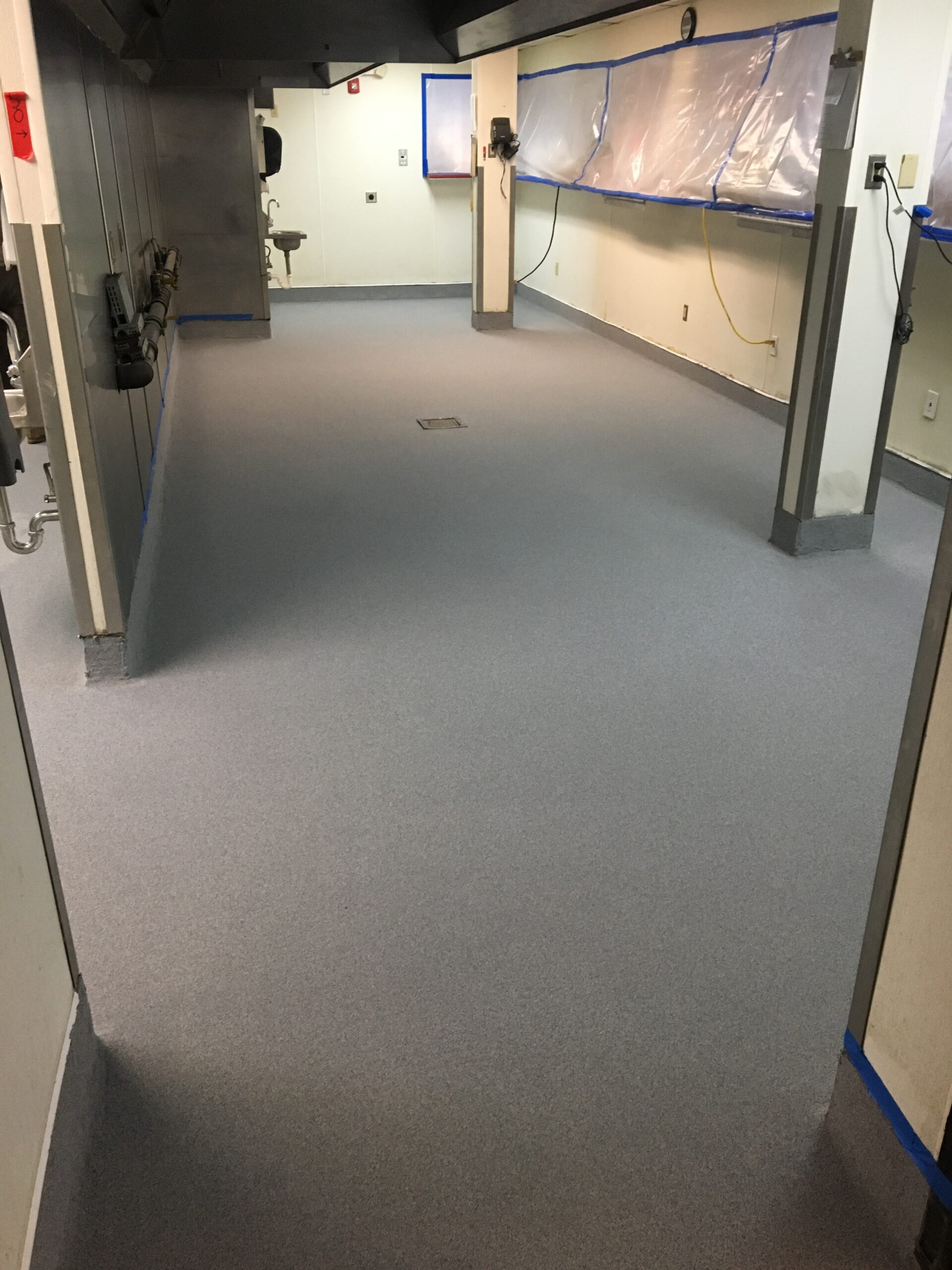
Colorado Concrete Repair installs epoxy cove base as part of high-performance resinous flooring systems across Denver and the Front Range. Cove base eliminates the hard 90-degree floor-to-wall joint where moisture, debris, and bacteria collect, replacing it with a seamless curved transition that is easier to clean, easier to inspect, and better suited for washdown environments. For USDA- and FDA-regulated facilities, commercial kitchens, medical spaces, and process manufacturing, integral cove is not an upgrade after the fact — it is part of building a floor system that performs during sanitation, traffic, and audits.
OR, SHARE YOUR PROJECT DETAILS:
Regulated-Environment Ready
Integral cove systems built for cleanable, non-porous floor-to-wall transitions in regulated and sanitation-critical environments.
Integral with Floor System
CCR forms cove as part of the resinous flooring assembly so the floor and base work as one continuous system.
Sanitation-Grade
Designed for washdown, chemical cleaning, and inspections where corners, seams, and absorbent materials create risk.
WHY COVE BASE MATTERS
The joint that fails sanitation first is usually where the floor meets the wall
Standard wall base leaves a sharp inside corner. In wet production, washdown, and chemical cleaning environments, that corner becomes the place where residue builds, where mops and hoses miss, and where coatings chip first. Integral cove changes that condition by turning the floor up the wall in one continuous radius.
01
Eliminates the 90-degree bacteria shelf
A square joint traps food solids, fines, standing water, and cleaning residue. A properly formed cove removes that collection point and gives sanitation crews a continuous surface they can actually clean.
02
Improves washdown performance
High-pressure rinse water and foaming chemicals move through a radius better than a hard corner. That matters in meat, dairy, bakery, beverage, and central kitchen environments where daily cleaning is part of operations.
03
Supports audit readiness
Inspectors look closely at cleanability, damage, and moisture intrusion at transitions. A seamless cove detail helps facilities present a more defensible sanitation condition during USDA, FDA, SQF, and internal quality audits.
CCR installs cove where performance matters most
This is not a decorative trim detail. It is part of the specification for the floor system. When Colorado Concrete Repair installs resinous flooring in regulated or heavily cleaned environments, the cove is designed around the service conditions: thermal shock, washdown frequency, chemical exposure, wheel traffic, and required cleanability.
That approach shows up across CCR’s project history in pharmaceutical manufacturing, food processing, commercial kitchen, warehouse, and industrial renovation environments where floor-to-wall transitions are operational details, not cosmetic decisions.
If the slab edge is damaged, if wall conditions are inconsistent, or if previous coatings are failing at the perimeter, those conditions are addressed before the new cove is formed. The same rule that applies to industrial floor coatings applies here: prep and substrate correction drive long-term performance.
Where cove base solves real problems
- Food soils and standing water collecting at the floor line
- Wall base damage from carts, pallet jacks, and washdown
- Repeated coating failure at wall perimeters
- Inspection comments tied to cleanability and damaged transitions
- Need for a continuous resinous system from slab to wall
- Chemical splash on perimeter walls in process areas
Types of Cove Base Systems Compared
Select the system type to review where it fits, what it does well, and what to watch during specification.
Integral Cove — Formed with the Floor SystemBest practice▼
Best for: New resinous floors in food, pharma, medical, cleanroom, and process manufacturing spaces where cleanability and durability are part of the operating standard.
✓ Strengths:
- Forms one continuous transition from floor to wall
- Strongest bond and best long-term cleanability
- Can be built from epoxy, urethane cement, or novolac systems depending on service conditions
- Common detail for food, pharma, and sanitation-critical spaces
Tradeoffs:
- Requires wall and slab edge prep, not just floor prep
- More detailed labor than straight floor coating work
- Best installed during full flooring scope, not as an afterthought
Retrofit Cove — Added to Existing ConditionsCondition dependent▼
Best for: Existing facilities with sound floors or phased renovation plans where perimeter sanitation problems need to be corrected without replacing every square foot at once.
✓ Strengths:
- Can improve cleanability at targeted perimeter zones
- Useful in phased upgrades and active facility renovations
- Can be paired with patching, wall repair, or localized coating replacement
Tradeoffs:
- Bond quality depends on the existing coating and substrate condition
- May require removal of old wall base, mastics, or failed coatings first
- Transitions between old and new systems must be carefully detailed
4" Cove HeightStandard commercial▼
Best for: Most commercial kitchens, utility rooms, light manufacturing, and general sanitary spaces where routine cleaning is required but heavy splash and aggressive washdown are moderate.
Four inches is the most common cove height because it protects the floor line, cleans easily, and keeps installation efficient. It is often the right answer when there is no specific regulatory or owner standard calling for a taller base.
6" Cove HeightFood and washdown▼
Best for: Food processing, meat and dairy production, beverage plants, pharmaceutical manufacturing, and rooms with frequent hose-down cleaning or chemical splash higher up the wall.
Six inches is a common upgrade where sanitation teams need more protected wall surface above the floor line. In many food environments, it becomes the more conservative specification because it keeps the vulnerable lower wall area inside the resinous system.
Material Selection: Epoxy, Urethane Cement, or Novolac?
The right cove material follows the floor system and the environment. CCR does not treat every cove base as the same product because the service conditions are not the same.
| System | Best Use | Primary Strength | Watchouts |
|---|---|---|---|
| Epoxy Cove | General industrial, medical, commercial kitchen, dry or moderate-wet sanitary areas | Strong bond, clean finish, good chemical and abrasion resistance | Less forgiving under severe thermal shock than urethane cement |
| Urethane Cement Cove | Food processing, hot washdown, moisture-prone production, thermal cycling | Handles thermal stress, moisture, and demanding sanitation better | Higher material cost and more exacting install conditions |
| Novolac Cove | Chemical processing, battery areas, harsh solvent or acid exposure | Superior resistance to aggressive chemical attack | Should only be specified where exposure justifies it |
Epoxy Cove Base
Epoxy cove is the standard choice for many resinous flooring systems because it forms a dense, cleanable, visually consistent transition with the floor. In pharmaceutical areas, medical support spaces, labs, and many commercial kitchens, epoxy cove provides the sanitary benefit owners want without over-specifying the chemistry. CCR’s Jobber catalog includes self-leveling epoxy for food processing, epoxy flooring with urethane topcoat, high-build epoxy systems, and textured epoxy assemblies that can all be paired with cove details where appropriate.
Urethane Cement Cove
When hot water cleaning, thermal cycling, steam, or constant moisture are part of the environment, urethane cement is usually the stronger specification. It fits kitchens, food production, and other facilities that push flooring systems harder than standard commercial occupancy. Urethane cement cove is especially valuable when the owner wants the base to perform at the same level as the floor.
Novolac Cove
Novolac cove is the specialty option for the toughest chemical environments. CCR’s Jobber product list includes novolac chemical resistant epoxy for harsh service areas, which is where this chemistry belongs: aggressive cleaners, acids, solvents, or industrial processing conditions that would shorten the life of a conventional epoxy. Novolac is not the everyday answer, but when chemical resistance is the governing requirement, it can be the right one.
COMMON APPLICATIONS
Where epoxy cove base is most often specified
Any facility that needs a cleanable transition, repeated sanitation, or perimeter durability can benefit from cove base. The level of chemistry and build depends on operations.
Food Processing
Meat, bakery, beverage, ingredient, and prepared-food operations use cove to support washdown and reduce contamination risk at the floor line. CCR’s project history in food and beverage environments aligns closely with the conditions where integral cove is typically part of the floor package.
Pharmaceutical
Pharma spaces need cleanability, documentation, and a controlled surface condition. CCR’s work in regulated manufacturing and technical support areas reflects the level of finish control expected in those environments.
Commercial Kitchens
Kitchen floors and wall transitions see grease, hot-water cleaning, dropped utensils, and aggressive detergents. Cove helps the perimeter hold up better than traditional base systems that separate, absorb moisture, or trap residue.
Medical & Veterinary
Clinics, medical device production, and animal care environments benefit from seamless wall transitions because they reduce soil collection and simplify cleaning around room perimeters and support spaces.
Cleanrooms & Labs
A cleanroom floor cannot stop at a dirty perimeter detail. Cove helps maintain a more consistent, inspectable envelope where dust control and cleanability are more important than appearance alone.
Industrial Processing
Battery areas, charging rooms, wet manufacturing, and chemical process spaces often need cove for containment, cleanability, and resistance at the point where floor spills reach the wall.
What CCR evaluates before specifying cove base
- Cleaning method and frequency — light janitorial maintenance and daily high-pressure washdown are two different specifications.
- Thermal conditions — freezer transitions, hot washdown, and temperature cycling push the perimeter detail differently than conditioned interiors.
- Chemical exposure — detergents, sanitizers, acids, and process fluids affect whether standard epoxy, urethane cement, or novolac is the right chemistry.
- Wall construction — concrete, CMU, drywall, FRP-backed assemblies, and previously coated walls all affect prep and termination detailing.
- Existing floor condition — delamination, moisture, cracked slab edges, damaged curbs, and prior base removal can change scope materially.
- Required cove height — 4" is common, but 6" or higher may be justified by cleaning protocol or owner standard.
- Traffic at the perimeter — carts, pallet jacks, scrubbers, and washdown hoses all increase wear at the base.
- Phasing and downtime — active plants often need retrofit or zone sequencing rather than a full shutdown approach.
Why this matters
A cove base can look finished on day one and still fail early if it is built on a weak edge, tied into a failing floor, or specified with the wrong chemistry for the cleaning and temperature conditions.
CCR scopes cove the same way it scopes the floor: substrate first, environment second, material third. That is how the perimeter detail stays part of the flooring system instead of becoming the first place it breaks down.
FREQUENTLY ASKED QUESTIONS
Epoxy Cove Base — Common Questions
What cove height should we specify?
Four inches is the standard starting point for many commercial and industrial spaces because it protects the floor line and cleans well. Six inches is common in food processing and heavier washdown environments because it carries the resinous protection farther up the wall where splash, chemicals, and repeated cleaning are more aggressive. If your owner standard, auditor, or sanitation plan already defines a height, that requirement usually governs.
How much does epoxy cove base cost?
Cove base is priced by the linear foot, but the real cost is driven by more than the visible footage. Height, material selection, wall prep, floor edge repair, phasing, and whether the cove is installed with a full flooring system all affect cost. Integral cove installed during a broader resinous floor project is usually more efficient than trying to add it later after finishes are already in place. CCR confirms pricing after a site assessment because existing conditions matter too much to guess from plans alone.
Can you add cove base to an existing floor?
Yes, but only if the existing conditions support it. Retrofit cove is possible when the slab edge, wall substrate, and adjacent floor are sound or can be properly repaired. If the existing coating is delaminating, if mastics remain at the wall, or if moisture and damage are present at the perimeter, those issues need to be corrected first. Some facilities choose phased retrofit work when a full floor replacement is not practical in one shutdown window.
How long does epoxy or urethane cement cove base last?
Service life depends on the chemistry, the cleaning program, traffic, and substrate condition. A properly specified and properly installed cove that matches the floor system can last for many years. Failures usually show up first where the wrong material was used, where prep was weak, or where carts and washdown continuously damage the same perimeter area. In other words, longevity is more tied to specification and prep than to the word epoxy alone.
Are there USDA requirements for cove base?
USDA and FDA-regulated facilities typically need floor and wall transitions that are smooth, cleanable, non-absorbent, and durable under sanitation. Integral cove is one of the most common ways to meet that functional expectation because it removes the sharp, debris-holding corner at the floor line. The exact requirement may come from your facility standard, auditor expectations, or the system documentation from the coating manufacturer, so the right answer is to align the flooring scope with your inspection environment.
What is the difference between epoxy cove and traditional vinyl or rubber base?
Traditional base is a separate trim product attached to the wall. Resinous cove is built into the floor system itself. That means no exposed top edge, no caulked seam acting as the primary defense, and no soft material at the point where heavy cleaning and impact happen every day. In regulated or hard-use environments, that difference is significant because the base is part of the hygienic surface, not a decorative finish covering it.
Need integral cove as part of a resinous flooring project?
CCR works with facility managers, plant engineers, general contractors, and operations teams to scope floor-to-wall transitions that match the actual environment — from sanitary epoxy systems to urethane cement and chemical-resistant novolac details.